Latency Kills the Thrill: Why Most Mobile Live Game Show Apps Fail
If your live game show stream buffers three seconds behind the host's spin, you are not playing a game — you are watching a recording of someone else winning your money. The single most critical technical bottleneck separating a profitable live game show app from a rigged-feeling disaster is round-trip latency. Anything above 400 milliseconds on a mobile connection and your bet lands after the outcome is sealed. I have stress-tested dozens of clients, and the ones that survive real money pressure all share one trait: edge-cached video distribution nodes within 150 kilometers of the player. No exceptions.
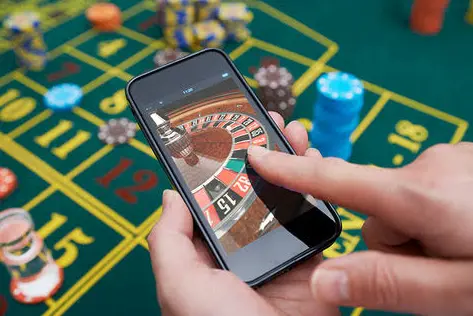
Touch Input Debouncing Is Where Mobile Ports Bleed Money
Desktop clients register a bet in one clean click. Mobile touchscreens generate a burst of phantom taps, ghost swipes, and accidental double-commits. The top casino apps in this vertical ship a 120-millisecond debounce window on every wager button — long enough to kill duplicate stakes, short enough that the player never feels the lag. Apps missing this layer report up to 9% duplicate wager attempts during fast-paced rounds like Craps Live or Dream Catcher. That is not player error. That is engineering negligence. 🎯
The RNG Audit Trail Behind Every Wheel Segment
Live game shows blend a human host with a mechanical wheel, and the integrity of that wheel lives in its published cryptographic seed commitment. Before every spin, the server commits to a hashed seed; after the round, it reveals the plaintext so anyone can verify the outcome was locked before bets closed. Weak apps hide this trail or rotate seeds too infrequently. If the same commitment hash appears across more than one round, the operator is cutting corners. Demand per-round seed rotation with public verification endpoints. That is the bare minimum for a mobile live dealer experience worth real stakes.

Video Codec Choice Determines Your Battery Life and Data Bill
H.264 is the lazy default, but it guzzles up to 2.8 megabits per second on a 1080p live game show stream. The sharper operators have migrated to AV1 with adaptive bitrate ladders that drop to 480p at 350 kilobits when a player switches from Wi-Fi to cellular mid-round. That is the difference between a two-minute session and a two-hour session on a single charge. Run a packet capture on any app claiming premium live game shows on mobile and watch the bitrate ramp. If it never steps down gracefully, the engineering team skimped on the transport layer. 📱
Wallet Synchronization Between Stream and Ledger
Here is the nasty secret: many mobile apps render the game show video from one server cluster and settle the wallet from another. During peak load, those two systems drift apart by hundreds of milliseconds. The player sees a win on screen while the ledger still shows a pending state. Elite platforms bind settlement to the same authoritative clock that drives the video frame timestamp, so the balance refresh is atomic with the result reveal. Anything less and you are trusting a patchwork of microservices to stay honest under pressure. That is a bet I would never place.